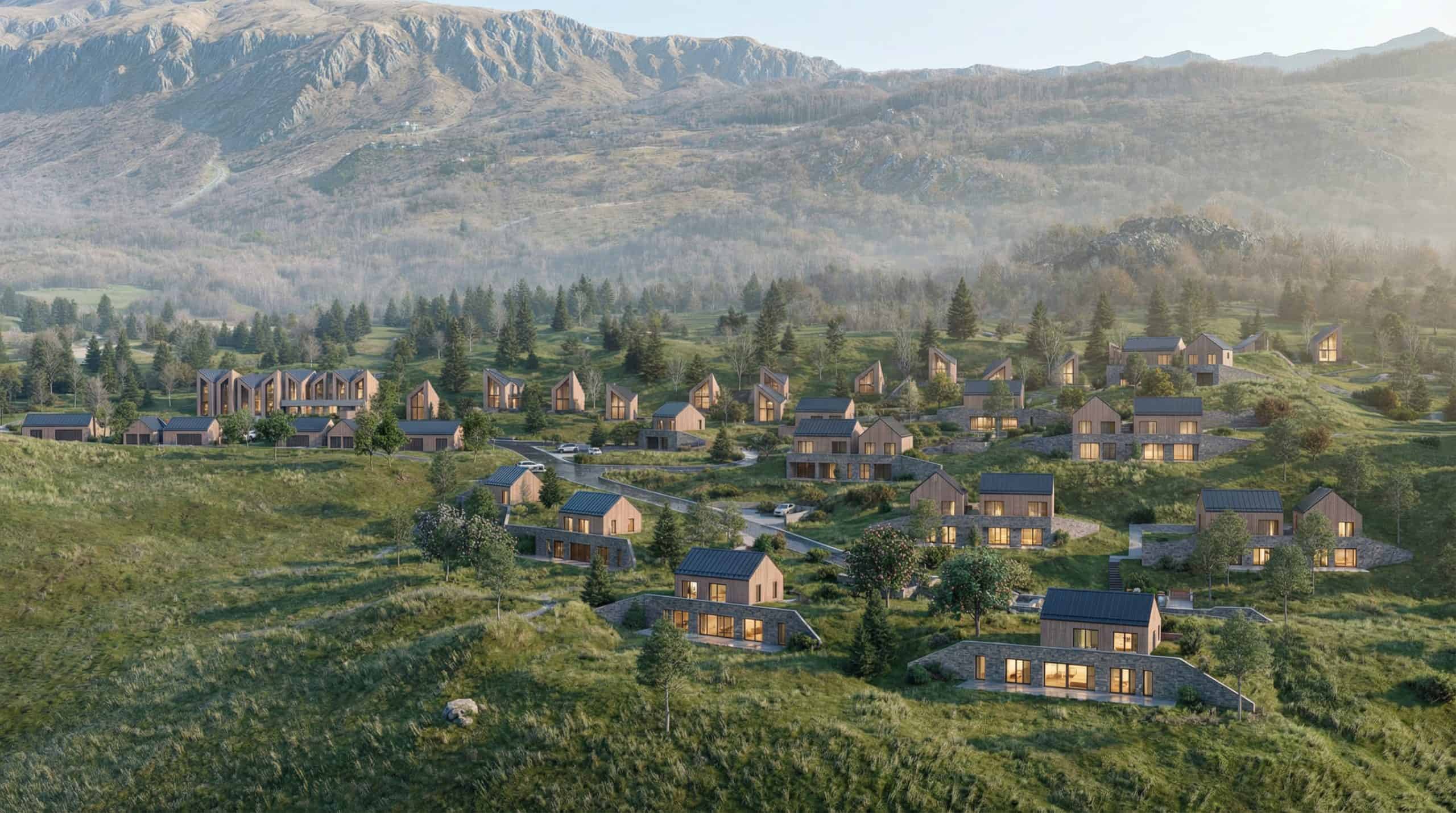
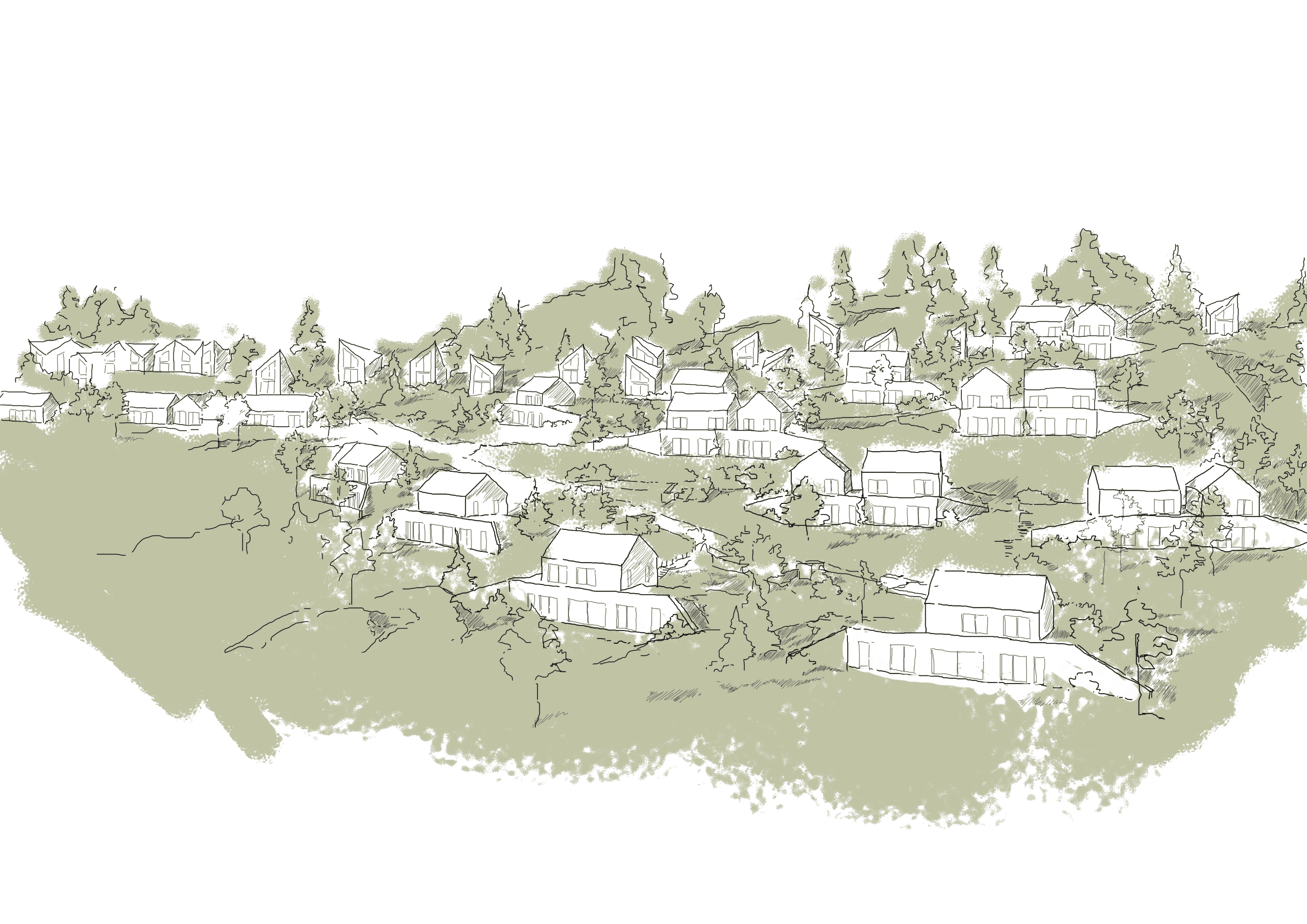
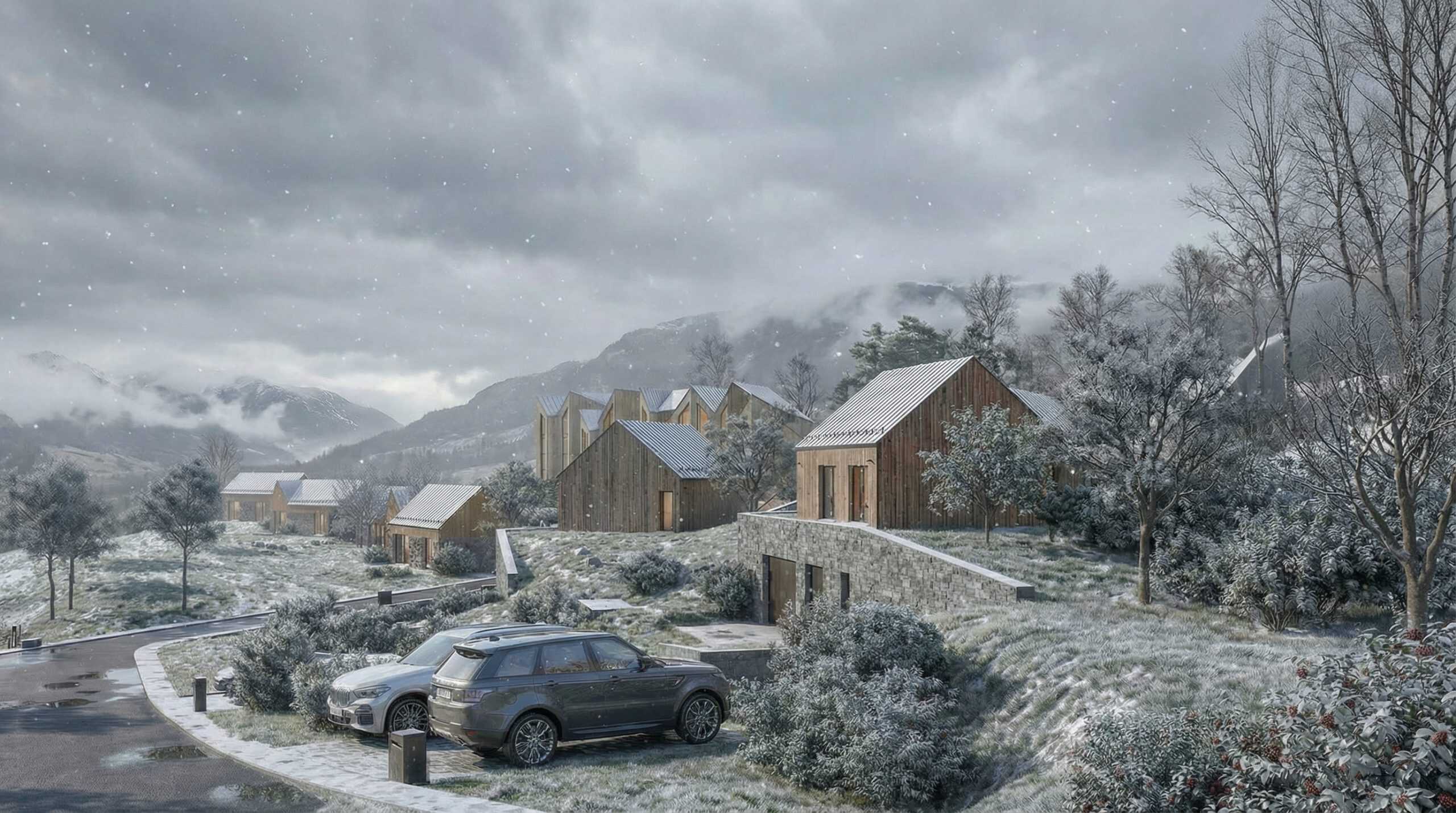
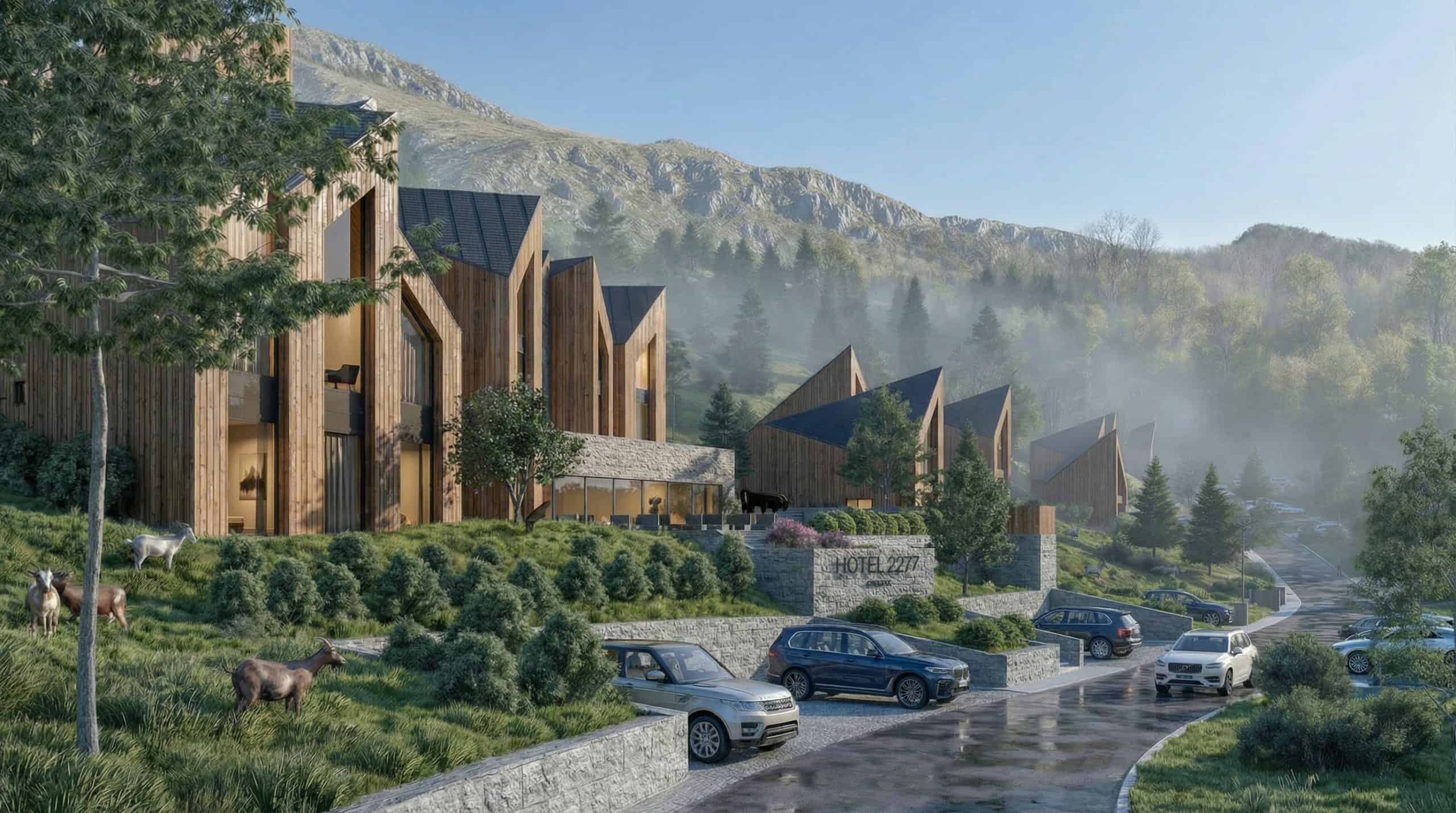
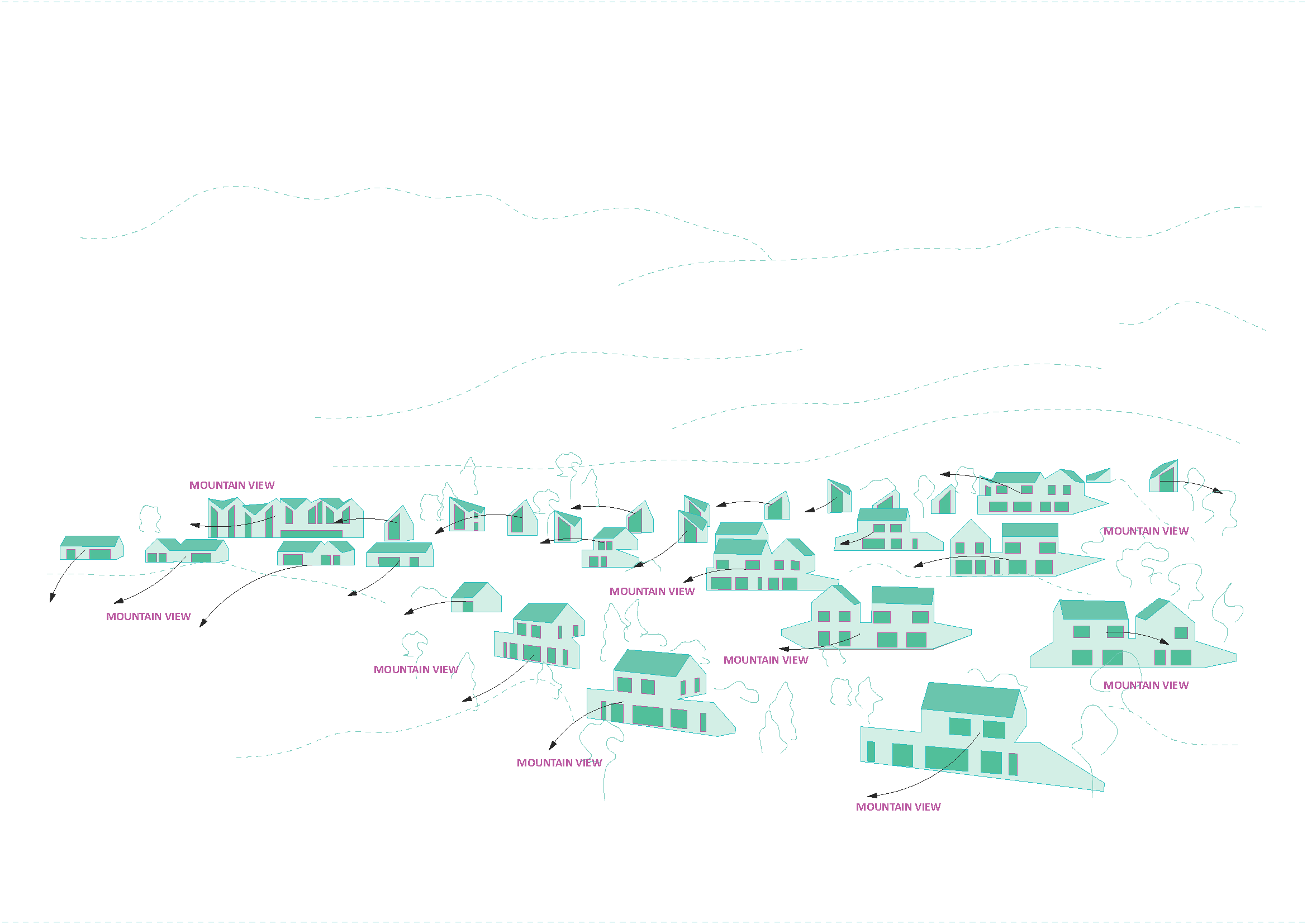
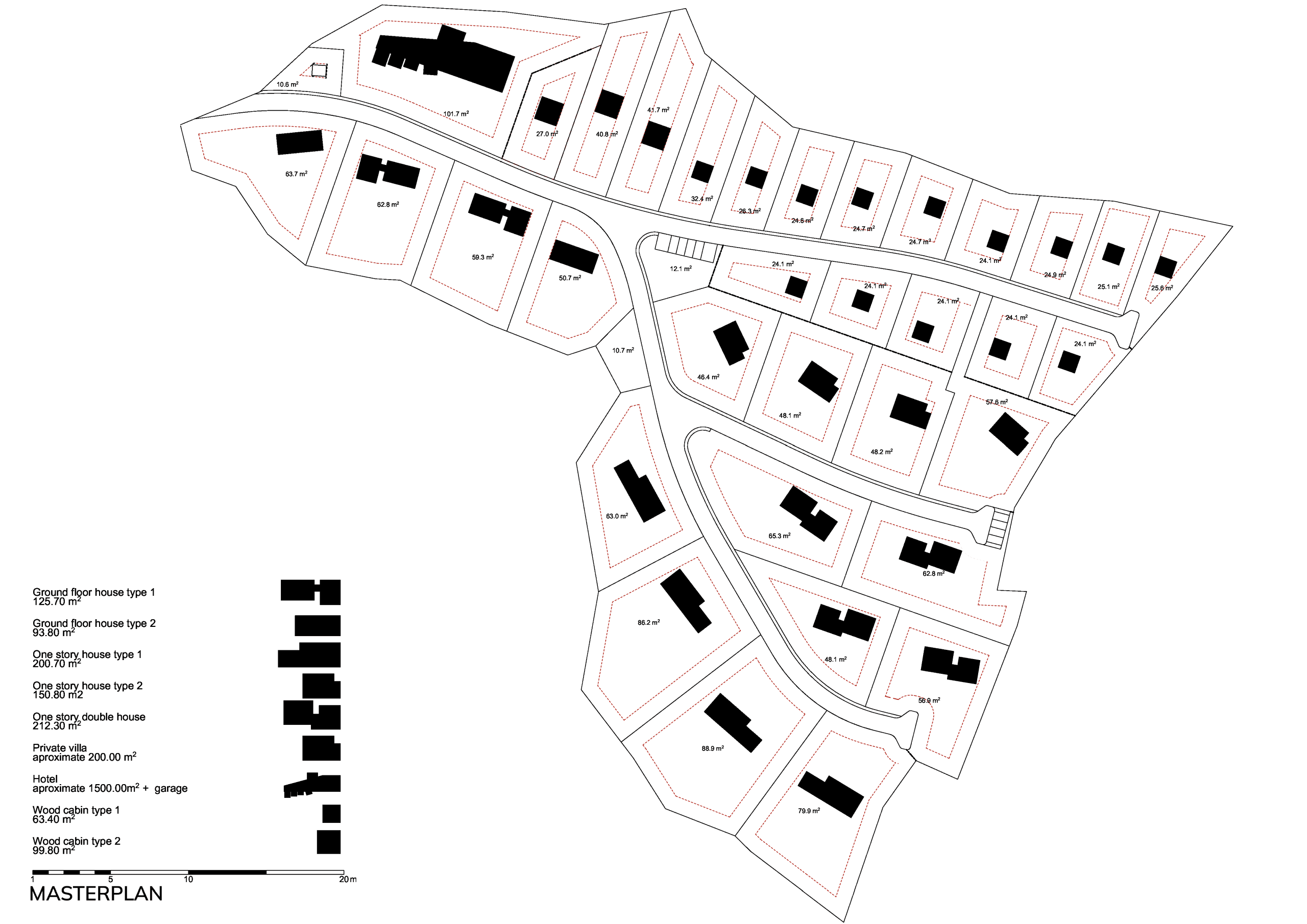
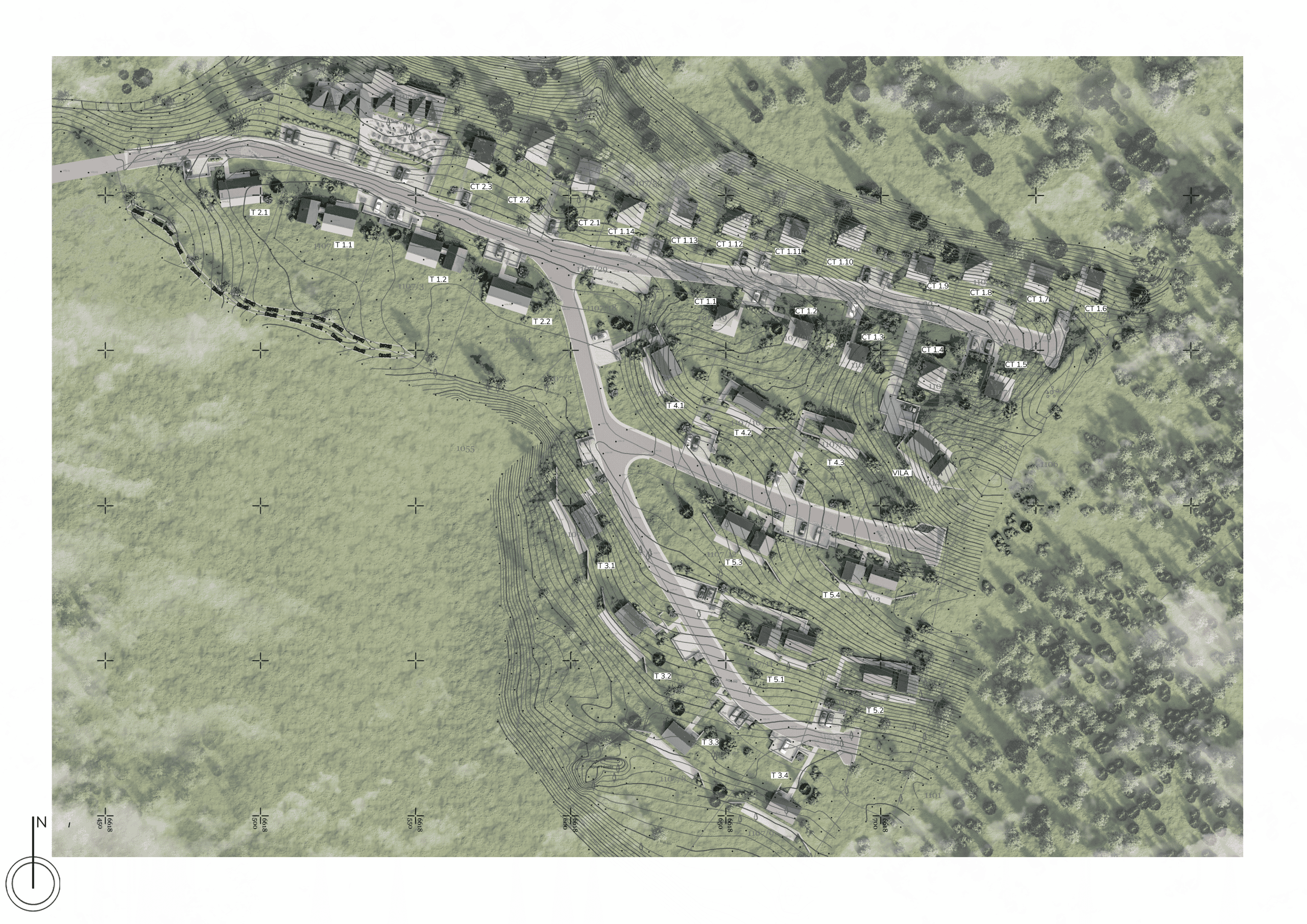
Lipovo Resort is composed of thirty-three individual houses, each carefully positioned to follow the contours of the terrain and to respect the natural rhythm of the site. The settlement unfolds like a mountain village, scattered yet connected, creating a sense of community while preserving privacy. The architectural concept draws inspiration from the vernacular traditions of northern Montenegro, where stone and timber have long defined the language of construction. In this project, those materials are reinterpreted with contemporary techniques, resulting in dwellings that feel both timeless and progressive. The resort is not conceived as a collection of isolated houses but as a coherent ensemble, where paths, clearings, and shared spaces foster encounters and a sense of belonging. At the same time, the arrangement allows for intimacy, offering residents quiet retreats within the larger community.


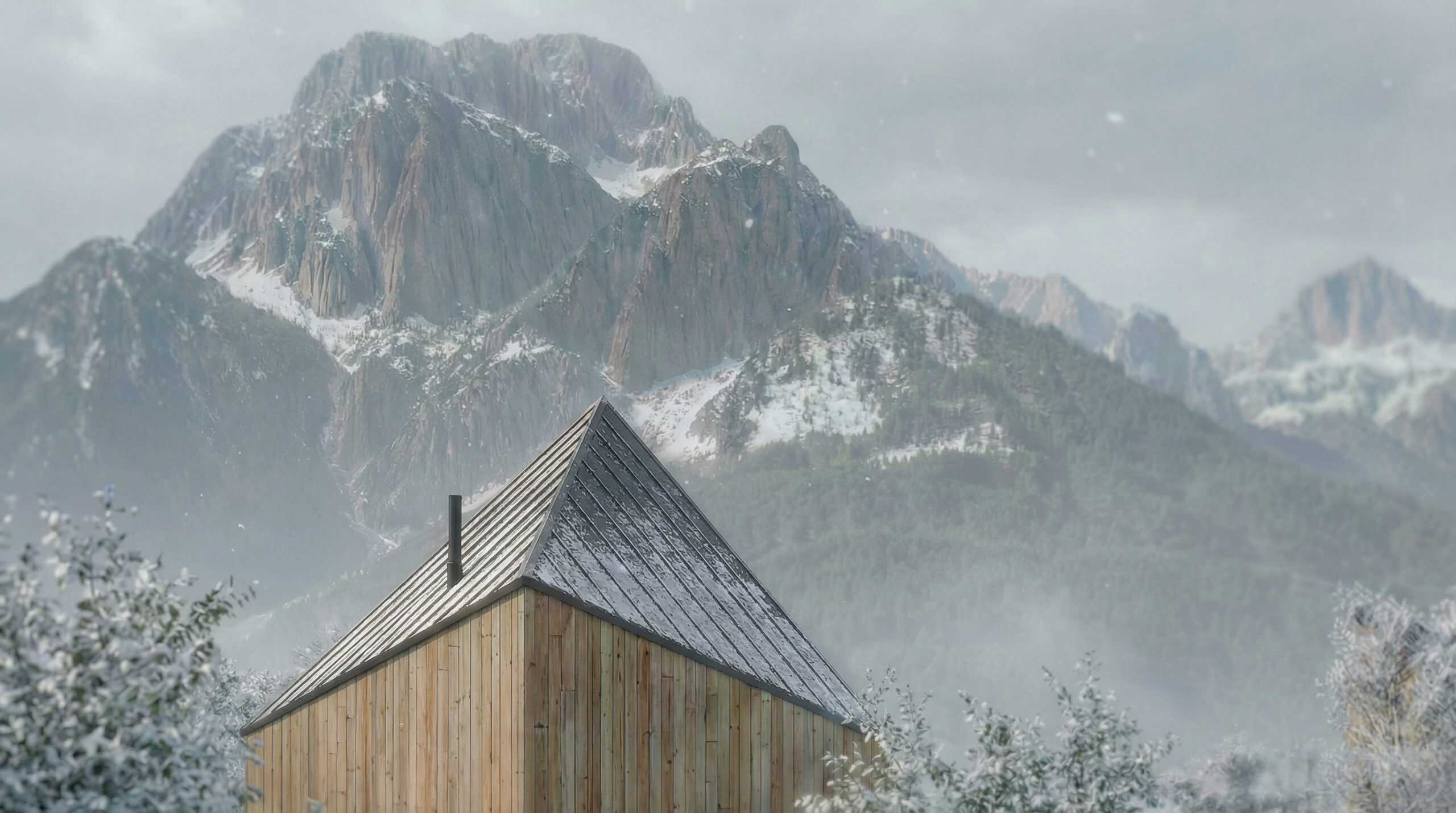
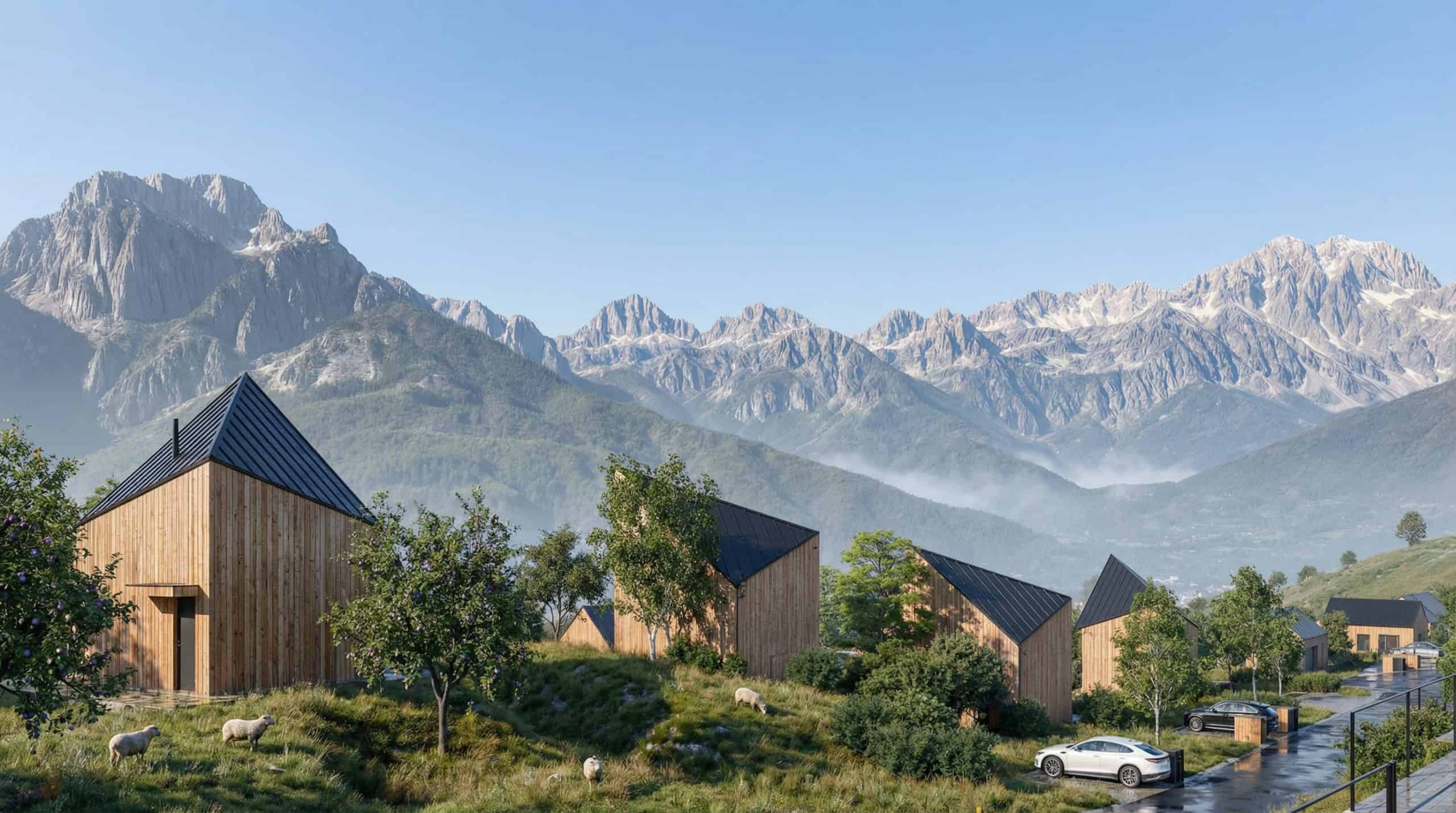
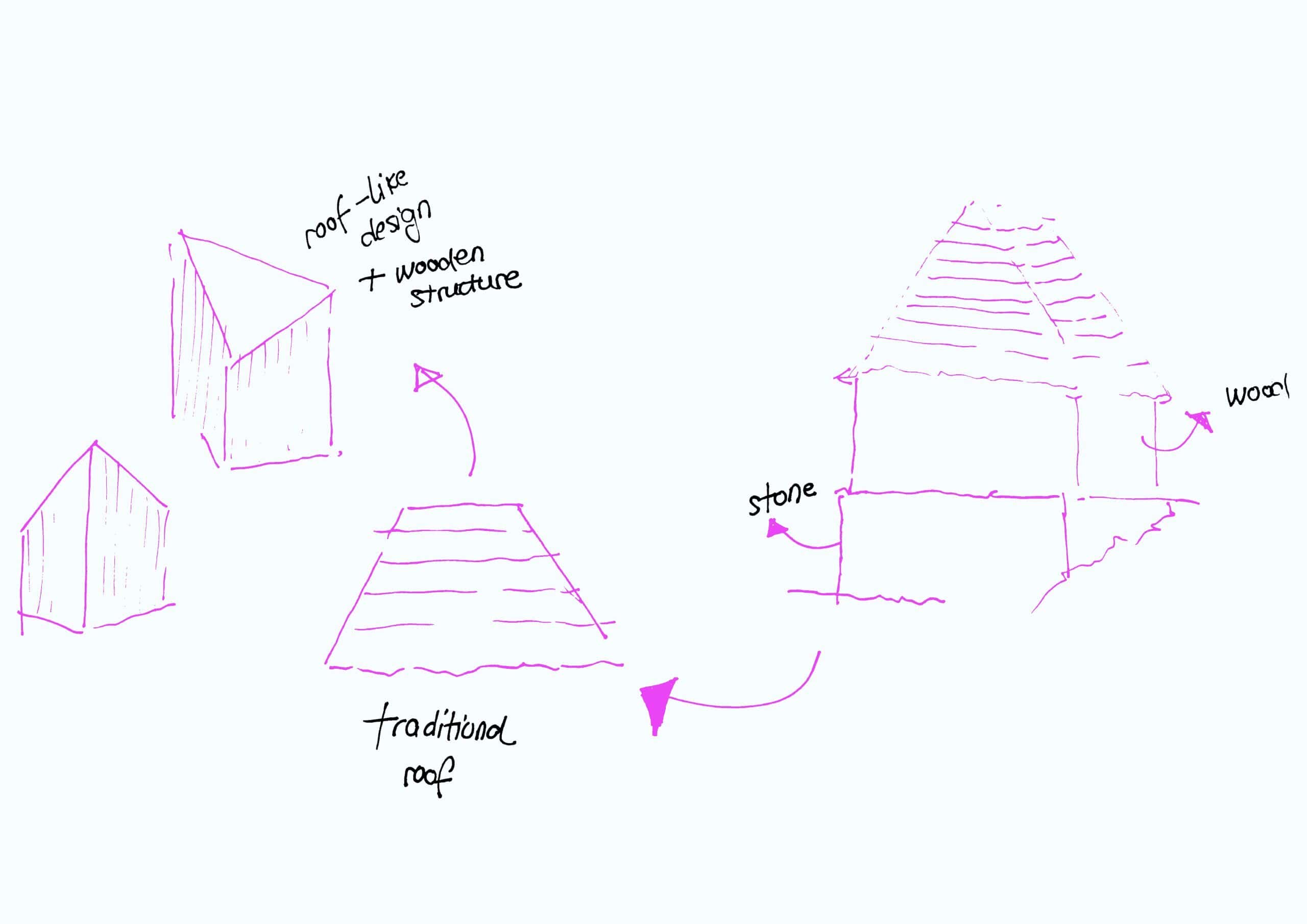
Stone foundations anchor the houses firmly into the hillside, echoing the resilience of rural structures that have endured for centuries. Above them, vertical wooden cladding introduces warmth and tactility, allowing the buildings to blend seamlessly with the surrounding forests. The roofs are steeply pitched, a direct response to the heavy snowfalls of the region, and their silhouettes recall the archetypal forms of mountain shelters. Large windows open the interiors toward the dramatic peaks, framing views that shift with the light and seasons. Orientation was a central design principle, ensuring that each dwelling engages directly with the grandeur of the mountains. This deliberate positioning transforms the landscape into a living backdrop, a constant presence in daily life.
Sustainability is embedded in the project's DNA, from the choice of local materials to the minimal intervention in the terrain. By following natural contours, the design reduces ecological impact and preserves the authenticity of the site. The stone bases provide thermal stability, while timber surfaces age gracefully, deepening the bond between architecture and environment. The houses are designed to adapt, to endure, and to grow more integrated with time. Lipovo Resort thus becomes more than a residential complex; it is a cultural statement about continuity and respect. It acknowledges the wisdom of vernacular forms while embracing the possibilities of modern construction. Each dwelling is a vantage point, a frame through which the mountains reveal themselves anew. The settlement embodies resilience, rootedness, and ecological awareness. It is a place where tradition informs innovation, where past and future meet in the present. The resort's architecture is not ornamental, but essential, shaped by climate, culture, and terrain.